Lessons Learned From My Apple Trees
They're Really Not That Much Different From Me
by Bob Summerfield
Brovold Community Orchard
Alberton, Montana
Managing an orchard is a lot of work. While I’m getting an abundance of physical exercise working in the orchard, my mind and spirit often have an opportunity to get
a workout too. There’s something about walking among a grove of young and old
apple trees that causes me to reflect on life, both theirs and mine. The
youthful vigor of the young trees contrasted with the scarred and misshapen
figures of the old trees makes me think about the journey of my own life and
the lessons life teaches us along the way. In the end, my apple trees are not
that much different from me. Our youthful potential is shaped over time by the
many triumphs and defeats we experience in our daily battles to exist. If we’re
lucky, those battles teach us lessons that accumulate over a long life. These
accumulated lessons are the origin of wisdom.
The Stages of Life
This narrative will speak about the life stages of apple
trees, but the subliminal message is that people experience just about the same
stages of life. As you read about the life of apple trees, think about how the
same principles apply to your own life. In reality, I am speaking about both
apple trees and people.
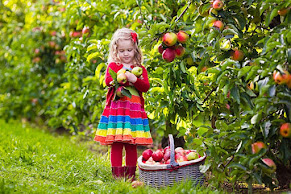
When a new apple tree comes into the world,
whether through seed or some form of vegetative propagation, it holds all the
potential that its genetic makeup allows. Not all trees are exactly alike, of
course. Its genes will determine if it will be cold hardy or not, to what extent
it is disease resistant, and whether it will produce red or yellow apples. Other
characteristics, like whether it will be a tall or short tree, and whether it
will be long or short lived, may be determined both by genetics and the
environment in which the tree is planted. Young trees must be trained to grow
in the way we want them to be later in life. If not, they will become wild and
unruly and not very productive. The training comes by way of pruning, or
cutting away undesirable parts, and by bracing or bending them in the way that
is best for them to grow. Young trees need to be solidly rooted and well fed to
achieve their growth potential. Sometimes, they seem to shoot up overnight like
a teenager. They also need plenty of sunlight and fresh air to be at their
best.

A middle-aged apple tree is in its most
productive working years. It produces a lot of fruit for the people who are
dependent on it. Year after year it goes about its job with no complaints. Occasionally,
though, it will take a year off to rest. A sort of vacation if you will. But
then it goes right back to work and is even more productive. Inevitably, storms
come into the life of a middle-aged tree, and these can cause damage, like
broken limbs. If sufficiently severe, a storm could even uproot a tree and end
its life prematurely. External vectors, like animals or equipment, may damage a
tree, resulting in wounds that may never fully heal. Microbes may enter these
wounds and cause a tree to rot from the inside out. Similarly, insects may lay
eggs on the tree’s young fruit, and the larvae will burrow inside, spoiling the
apples. These bad influences will sometimes cause the fruit to become rotten to
the core. When an apple tree produces good fruit, though, the sweet, crisp
apples are a delight that will bring a smile to any child’s face. “By their
fruit ye shall know them,” is a familiar adage, and you’ll certainly know a
good apple tree by the wonderful fruit it yields.

Old apple trees are gnarly and misshapen, bearing wounds
accumulated over a lifetime. Their trunks and limbs may be moss-covered, and
ants or other insects may live in their rotten centers. They are weakened by
years of exposure and the stresses of a hard life. Some of their largest limbs
may even be missing. Yet they still do their best to be productive. Their
apples may not be as plentiful or as large as in the past, but they are just as
sweet as ever. You can tell when an apple tree is nearing the end of its time.
Their lifespan is not much different from a human’s really. One hundred years
is a very old age for an apple tree.
12 Lessons We Learn from Apple Trees
1. You are a product of your genetic makeup and your
environment. You can’t do much about your genes, but planting yourself in a good
clean and healthy environment will improve your chances of having a productive
and successful life. If you have good genes AND a good environment, count your
blessings. We take our blessings for granted far too often.
2. Plant your roots deeply. Establishing a connection to
place and values will allow you to weather the storms life inevitably brings.
Be an active part of your local community and allow it to be a part of you.
Know what you believe, and hold strong to your values. There is good and bad in
the world. Always work for good in the place where you are planted.
3. Just because an apple tree didn’t produce fruit last year
doesn’t mean it won’t this year. Let the disappointing parts of your past go
and look to the present. Each day is a new day; each year is a new year. Strive
to be your best each day. It’s never too late to do the right thing.
4. Sometimes an apple tree takes a year off just to rest.
Being busy every moment isn’t being productive, it’s being a workaholic. It’s
okay to take time off for rest and relaxation. Take care of yourself, and then
when you do get back to work, you’ll be that much more productive.
5. Apple branches grow some each year. A good orchardist encourages
the desirable growth by pruning away the undesirable growth. Prune the
undesirable parts out of your life, and the things you want to keep in your
life will grow stronger.
6. There are no perfect apple trees or perfect apples. A
small blemish on an apple doesn’t stop it from being sweet to the taste and
nourishing to the body. Don’t let your imperfections stop you from bringing
comfort and happiness to others.
7. In my orchard, bears sometimes break limbs off the trees to
get the apples, and a deer can kill a young tree by rubbing its antlers on the
bark. I must protect the trees from these destructive influences. Who and what
are the destructive influences in your life? Protect yourself from them.
8. An apple tree is a good thing, but a bunch of apple trees
is an orchard, and that’s even better. Surround yourself with compatible people
who you know and trust, and you’ll be a part of a greater good.
9. Apples don’t benefit an apple tree directly. Rather, the
tree is benefitted when people or animals spread the seeds from the apples, and
the seeds produce a new generation of apple trees. Likewise, share the fruits
of your life with others. It may not benefit you directly, but the seeds of
your generosity may come back to benefit the world in unforeseen ways.
10. Apples come in many colors, shapes, and sizes, and most
of them are good. The same can be said of people. Sometimes apples start off
good but then become rotten to the core. That can be said of people too.
11. Plants grow toward the light. Follow their lead and
avoid the dark things of life. Surround yourself with the light of truth and kindness.
12. Old, gnarly apple trees and elderly people may look disfigured
and unproductive, but both have fed and cared for many during their long lives.
Respect and honor them for what they have done. Learn the lessons they share. Treasure
the gift of the last fruits they have to offer.
###


